


AI Signals: From Customer Data to Customer Action
AI Signals runs managed machine learning on your unified Treasure AI data. Get scores, segments, and recommendations that flow into audiences, journeys, personalization, and AI agents. All without moving data or standing up a separate ML stack.
Models That Already Know Your Customers
Most ML projects begin by moving customer data somewhere else. Teams export tables, reconcile identities, and rebuild segments before a model can learn anything.
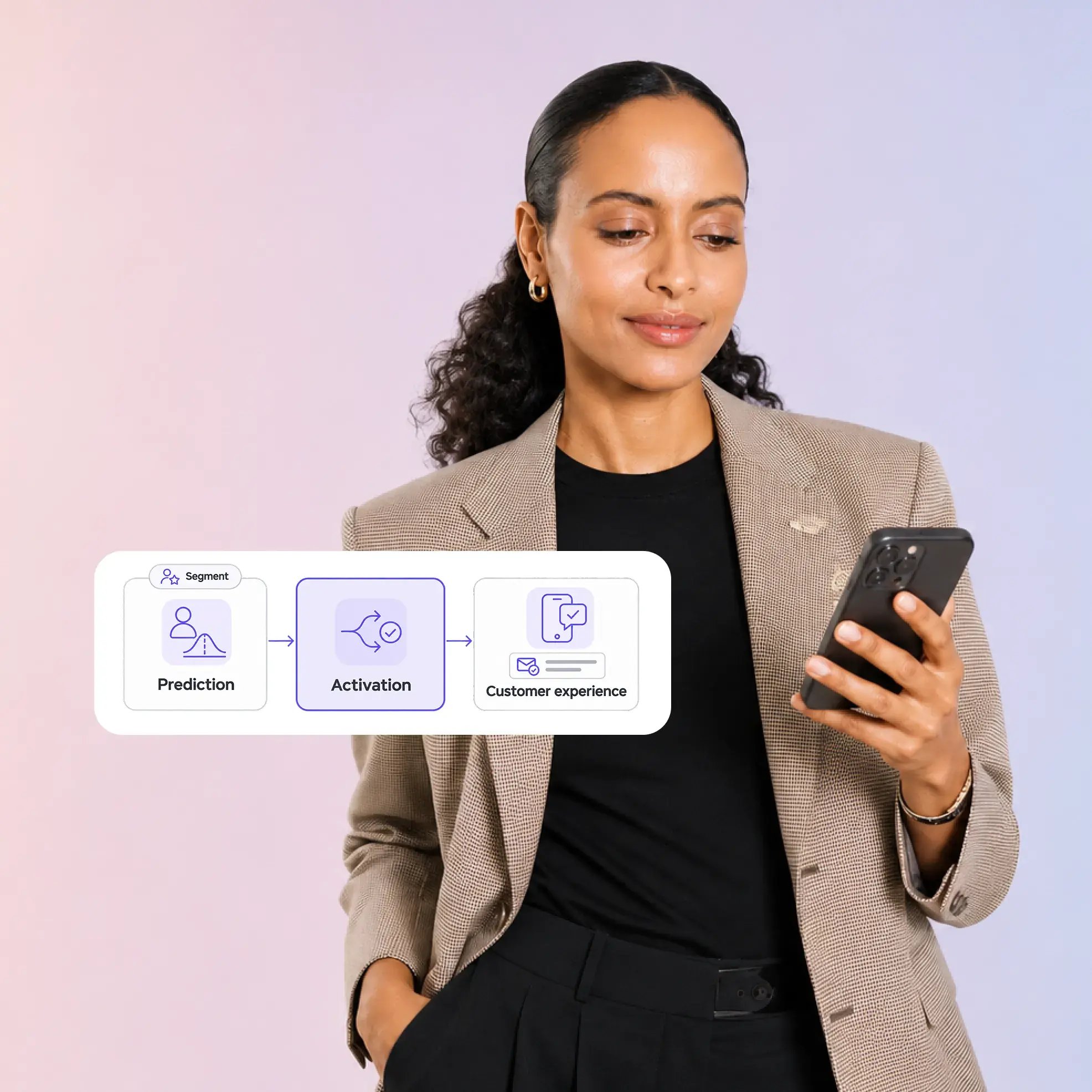
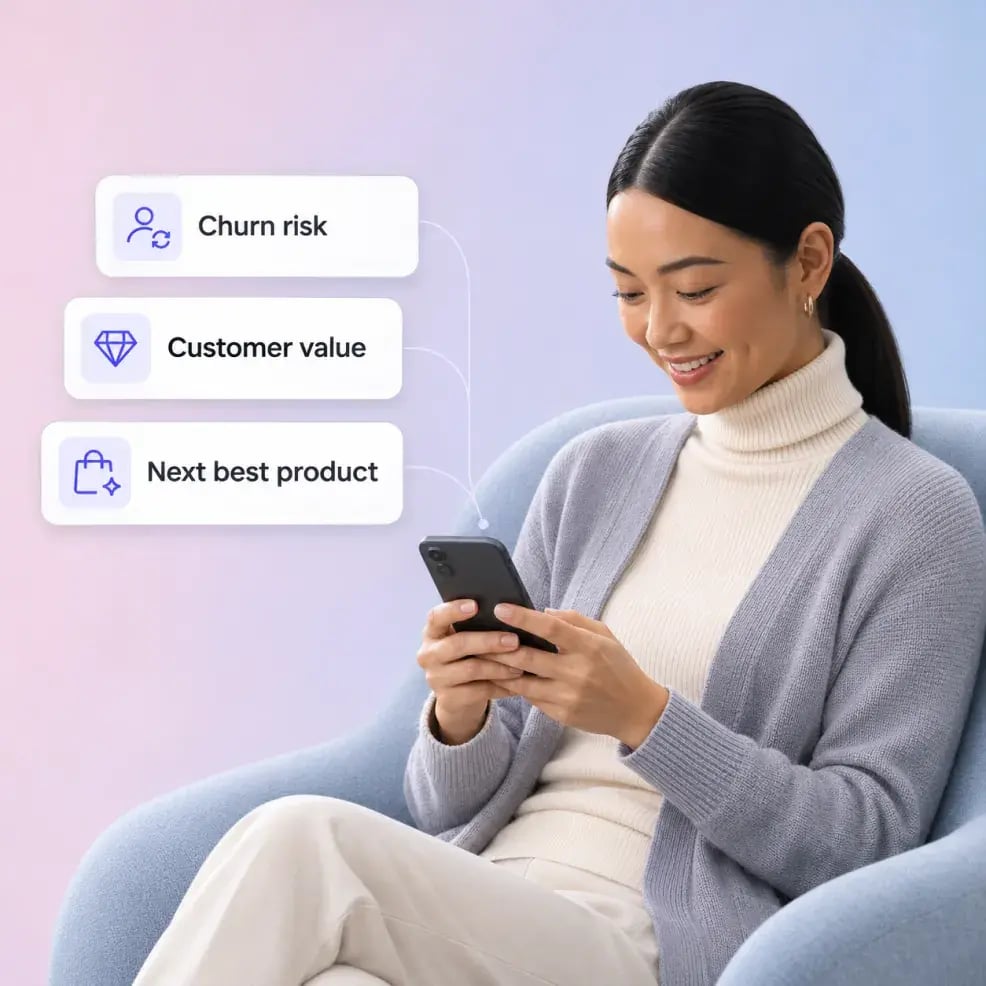
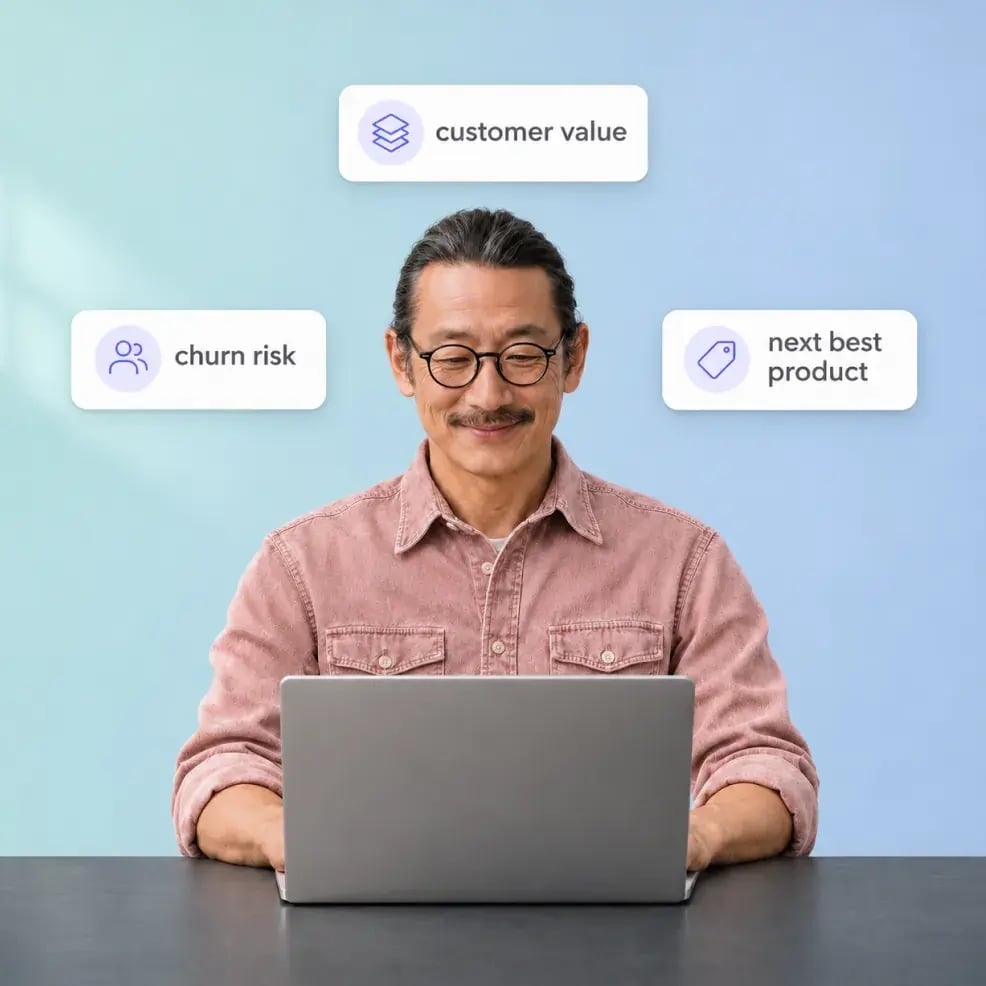
AI Signals runs natively on the unified customer profile already in Treasure AI. Predictions such as churn risk, customer value, and next best product write back as customer attributes and audience criteria, so your team can build an audience on a score and move it into a Journey without another integration.
Production ML Without the Operations Burden
Running ML in production takes more than training a model. Someone has to provision compute, schedule training runs, monitor predictions, and keep scores refreshed. Most lean data teams don't have that capacity to spare.
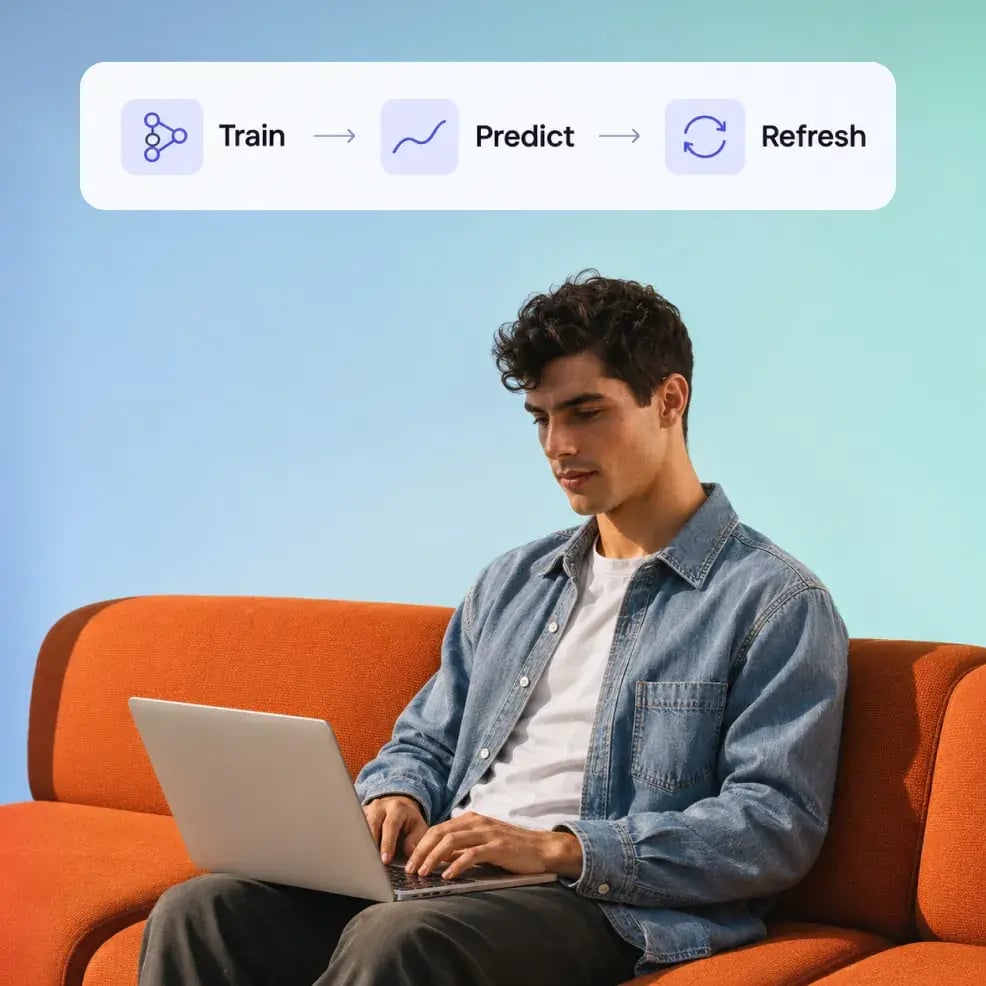
AI Signals handles the training and prediction infrastructure, and it scales as usage grows. Your data team schedules runs through Treasure Workflow and still defines the use case, prepares the data, and reviews model results. The work shifts from running infrastructure to making decisions.
Production ML Without the Operations Burden
Running ML in production takes more than training a model. Someone has to provision compute, schedule training runs, monitor predictions, and keep scores refreshed. Most lean data teams don't have that capacity to spare.
AI Signals handles the training and prediction infrastructure, and it scales as usage grows. Your data team schedules runs through Treasure Workflow and still defines the use case, prepares the data, and reviews model results. The work shifts from running infrastructure to making decisions.
Results Marketers Actually Can Use
Raw model output rarely helps a marketer decide who gets the next offer. It often takes a data scientist to interpret, filter, and reformat it before anyone can act, and that extra step slows every campaign.
AI Signals returns scores, segments, rankings, forecasts, and recommendations that marketers can use directly in Audience Studio, Journeys, and personalization. AI agents can use the same results to decide and act, so one prediction can inform both a campaign and an agent's next step.

Predictions Without Moving Your Customer Data
Every extra copy of customer data adds risk. Each export to an external ML platform creates another place to secure, govern, and audit it. For IT and data leaders, that can stall a promising model in review.
AI Signals trains and runs models inside Treasure AI against your unified customer data, and processing stays within the platform. Customer data does not leave Treasure AI, so your team can add predictive intelligence within the governed data foundation it already uses.


Move Budget Toward What Actually Works
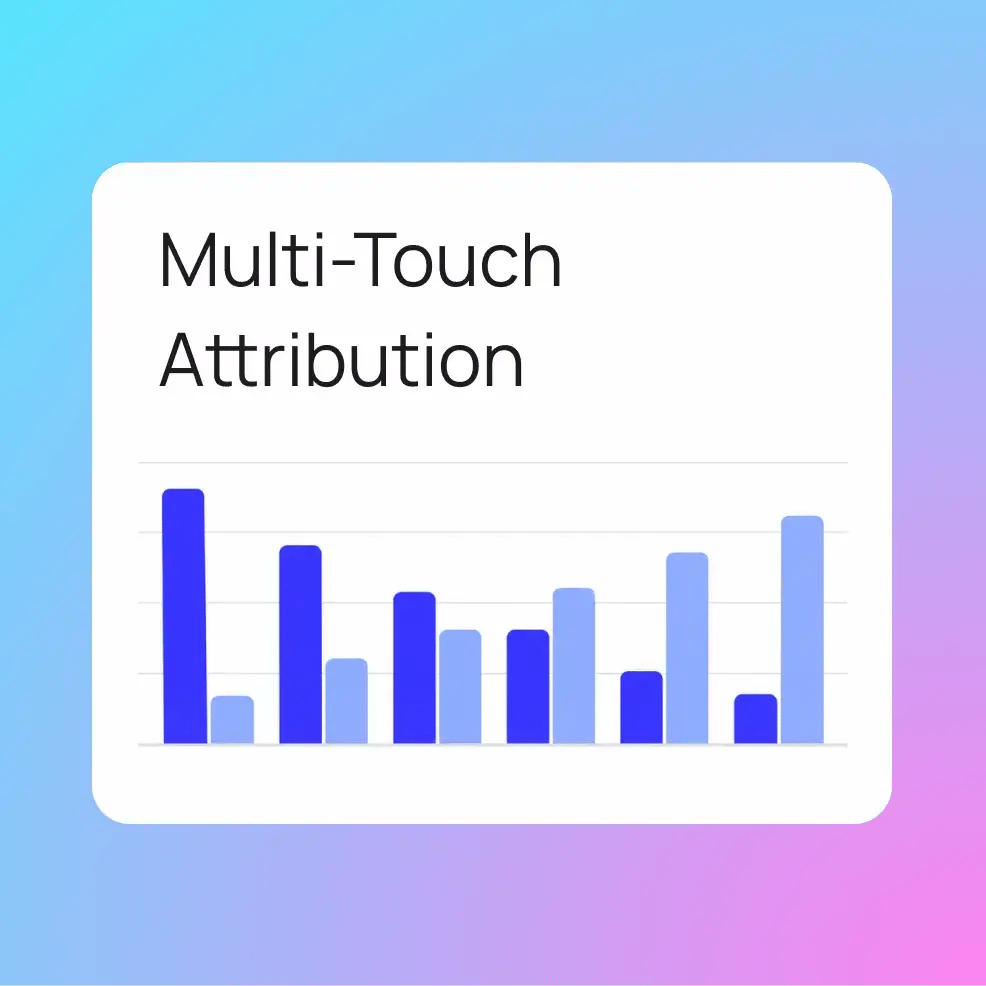
Budgets often follow reports that give all the credit to the last touchpoint, so channels that start customer journeys can look like they aren't working.
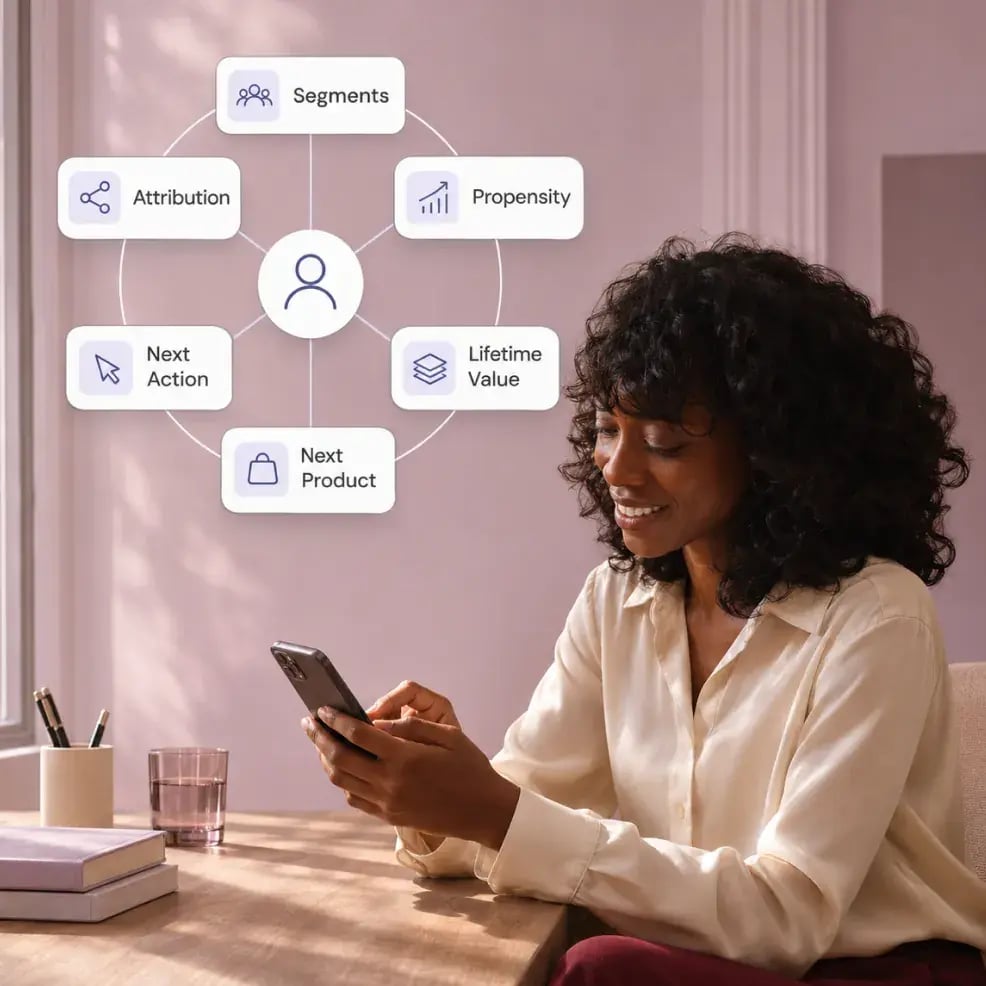
Multi-touch attribution shows which touchpoints contributed to each conversion, so you can see where spend performs. Your team can shift budget toward the channels and campaigns that drive results, and stop funding the ones that don't contribute.
Match Each Customer to the Right Offer and Channel
Many campaigns still send the same offer through the same channel to everyone. Some customers get messages they'll ignore, while others never hear about the offer that would have worked for them.
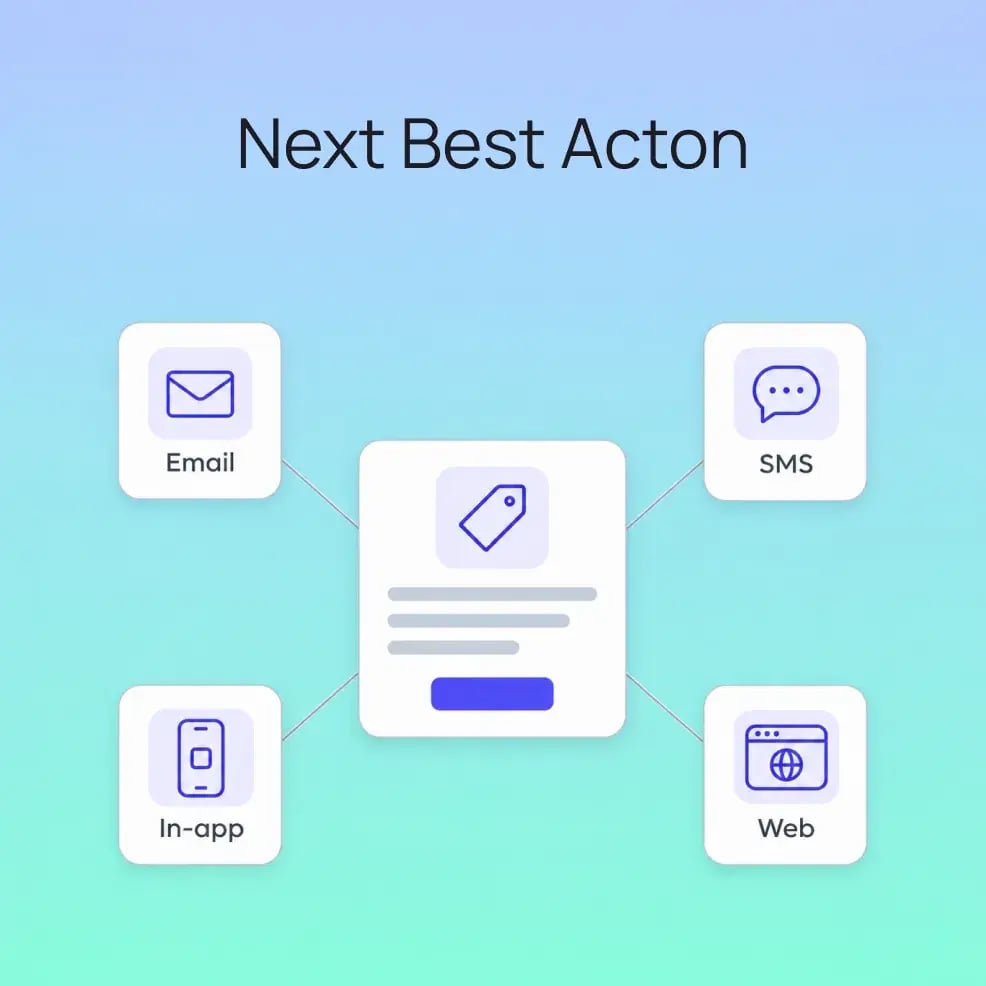
Next best action recommends the action, offer, or channel most likely to work for each customer. Those recommendations feed the journeys and campaigns your team already runs, so each customer gets a more relevant offer and fewer wasted sends.
Grow Revenue From the Customers You Already Have
Growth often comes from existing customers, but many teams still send the same promotions to everyone. Cross-sell opportunities go unnoticed, and customers see offers that don't fit what they buy or use.
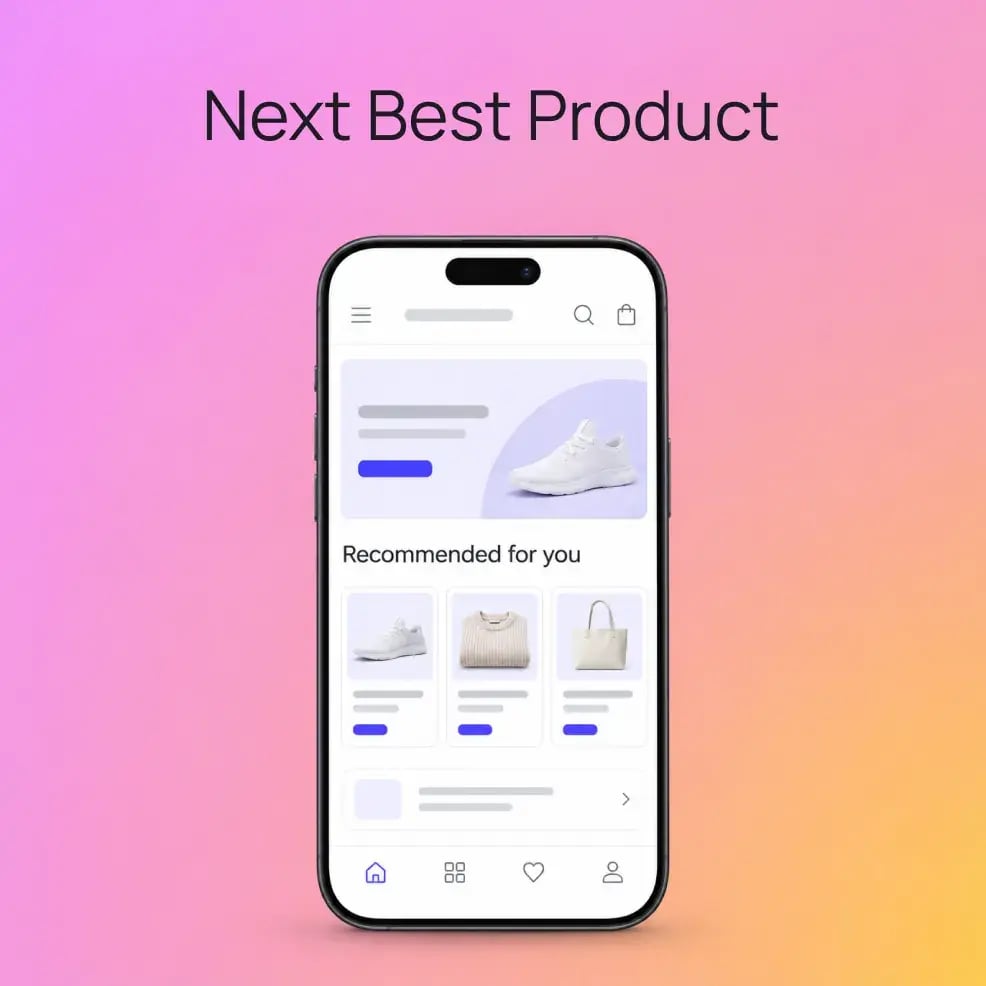
Next best product recommends the products, services, or content most relevant to each customer, based on past interactions. Your team can use those recommendations across email, web, and mobile, so existing customers see offers that match their needs.
Put Your Effort Where Customer Value Is Highest
Not every customer is worth the same effort. Yet many teams spread loyalty, retention, and acquisition budgets evenly, so high-value customers get the same treatment as everyone else.
Customer lifetime value forecasts future value for each customer and ranks customers by predicted worth. Those rankings help you direct retention investment and loyalty rewards toward the customers most likely to return the most over time.
Save Customers Before They Leave
Retention work is most effective before a customer leaves, but most teams spot the warning signs too late. Retention teams also need to decide who gets outreach without contacting every customer.
Propensity scores flag customers likely to churn, and RFM segmentation shows who is slipping away. Your team can trigger targeted save journeys for at-risk customers and spend retention offers where they're needed.
Case Studies

Nestlé: $4.9M saved and 71% higher CRM click-through in Mexico
Nestlé Mexico and Brazil unified their customer data and applied AI and machine learning to personalize at scale. Brazil retained 36% of at-risk customers through targeted engagement.

Subaru: $26M from one cash-back campaign
Subaru combined omnichannel marketing, predictive modeling, and audience segmentation to find customers ready to buy. The results included a 38% lower acquisition cost and a 250% increase in conversion among A-grade segments.

Global automaker: $125M in annualized margin uncovered
A global automaker applied predictive and prescriptive models to unified customer profiles. The work produced an estimated $68.8M increase in annual value and cut campaign execution time by 57%.

See the difference for yourself
One platform. Every channel. No extra vendors to reach your customer.