Your customer data is more complete than it has ever been. First-party behavioral signals, transactional records, loyalty events, and real-time browsing data flow into Snowflake, Databricks, or BigQuery every minute. The problem is not data volume. The problem is that most of that data sits idle — trapped between collection and action, while your competitors personalize in real time, suppress wasted ad spend the moment a purchase happens, and let AI agents make the next best offer before a human even opens a dashboard.
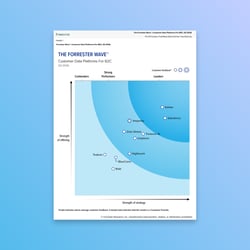
Data activation is what closes that gap. It is the discipline — and increasingly the technology — that turns stored customer data into real-time marketing action across every channel and tool. For a precise technical definition, "What is Data Activation" article on CDP.com is a strong starting point. This article goes further: it explains why activation fails at enterprise scale, what genuine real-time activation looks like in 2026, how to evaluate a data activation platform, and how Treasure AI — a Forrester Wave™ Leader for B2C CDPs, Q3 2024 — powers activation for 400+ global enterprises including Subaru, AB InBev, and Nestlé.
What Is Data Activation?
Data activation is the process of making customer data operationally useful — moving it from where it is stored into the systems and channels where it drives decisions and actions. That means syncing audience segments to paid media platforms for precise targeting, pushing enriched profiles to CRM and email tools for personalized outreach, surfacing real-time context to customer service agents, and enabling AI agents to trigger next-best-action decisions autonomously.
Activation is the final mile of the customer data pipeline. Data collection, unification, and identity resolution all feed into it. But activation is where business value is actually realized — and where most enterprises still leave the largest performance gap on the table. For a comprehensive definition of the concept, including the full activation data flow and enterprise architecture considerations, see the detailed guide on CDP.com.
Why Data Activation Fails at Enterprise Scale
Most data teams can activate data in a lab environment. The challenge is doing it reliably, in real time, across hundreds of destinations, without creating legal liability, identity chaos, or a brittle pipeline that breaks every time a schema changes. Three problems account for the vast majority of enterprise activation failures.
The Batch Latency Problem
Classic Reverse ETL tools — Hightouch, Census, and their predecessors — operate on schedules: hourly, every four hours, or nightly. That architecture made sense when destination systems had rate limits and data volumes were manageable. In 2026, it is a fundamental competitive disadvantage. A customer abandons a cart at 11:47 AM. Your Reverse ETL job runs at noon. The re-engagement email fires at 12:03 PM — sixteen minutes after the moment of maximum intent. Meanwhile, a competitor with real-time activation reached that customer while they were still on their phone.
Batch latency is not just a speed problem. It compounds across the funnel. When audience suppression lists are hours out of date, you continue spending media budget on customers who already converted. When churn signals are not acted on within the same session, early intervention becomes expensive late-stage rescue. The cost of latency is measurable and large.
The PII Sprawl Problem
This is the activation problem that nobody in the Reverse ETL category wants to talk about. Every sync that moves customer data to a destination system creates a new copy of PII. An enterprise running Reverse ETL to twenty-five destinations — ad platforms, email ESPs, CRMs, data clean rooms, customer service tools — has effectively cloned sensitive customer data twenty-five times. Each copy carries its own governance burden: GDPR right-to-erasure requests must be honored in all twenty-five systems. CCPA opt-outs must propagate everywhere. A data breach in any single destination exposes data you thought you controlled.
PII sprawl is not theoretical. As regulators become more aggressive and consumer expectations for data rights rise, enterprises are discovering that their data activation architecture has created a compliance liability that scales with the number of destinations. The correct architectural answer is to activate against data in your existing warehouse without copying it — zero-copy activation — with consent signals that propagate automatically to every downstream query.
The Identity Fragmentation Problem
A customer who browses on mobile, clicks an email on desktop, and purchases in-store is three different people in a Reverse ETL-only architecture. Without identity resolution stitching those signals into a unified profile, your activation is built on fragmented data: you re-target someone who already bought, fail to suppress the right email address, and miss the cross-channel behavioral pattern that would have predicted churn two weeks earlier.
At enterprise scale, identity fragmentation multiplies. AB InBev manages customer data across more than 2,000 data sources and 90 million records spanning dozens of brands. Without deterministic and probabilistic identity resolution at the foundation of activation, cross-brand personalization is impossible and attribution is unreliable.
What Real-Time Data Activation Looks Like in 2026
Real-time data activation in 2026 is not simply faster batch processing. It is a qualitatively different architecture — one where customer profiles update in seconds, AI agents make autonomous decisions based on those profiles, and governance checks run automatically on every action without slowing anything down.
AI Agent-Driven Activation (Agentic Activation)
The most consequential shift in enterprise activation over the past two years is the rise of AI agents as activation executors. Rather than waiting for a marketing manager to build a segment, export it to a tool, and manually trigger a campaign, agentic activation allows software agents to monitor signals, evaluate business rules, and take action across channels without human approval at each step. Three examples show how this works in practice:
- Churn Prevention Agent: The agent monitors real-time engagement signals — declining email open rates, reduced session frequency, increasing support contacts. When a customer profile crosses a configurable churn risk threshold, the agent triggers a suppression from prospecting ad spend, sends a personalized retention offer via email, and creates a high-priority CRM task for the account team — all within seconds of the signal, all in parallel.
- High-LTV Lookalike Expansion Agent: The agent continuously identifies customers who have crossed a lifetime value threshold in the past thirty days and automatically pushes updated lookalike seed audiences to Meta, Google, and programmatic DSPs. No manual export, no scheduled sync — the seed list reflects today's highest-value customers, not last week's.
- Real-Time Cart Abandonment Agent: When a customer abandons a cart, the agent evaluates the customer's full profile — loyalty tier, previous purchase history, average order value, channel preferences — and selects the optimal re-engagement message and channel in real time. High-value customers get a direct discount via SMS; price-sensitive mid-tier customers get a push notification; first-time visitors get a retargeting ad. Every decision is logged, auditable, and governed.
These agents are not science fiction. They are running in production today using Treasure AI's Agent Foundry, which provides the framework, API surface, and governance layer needed to deploy agentic activation safely at enterprise scale. For a broader look at how agentic marketing is transforming the discipline, see our guide to agentic marketing.
Real-Time Profile → Immediate Action (Seconds, Not Hours)
Real-time activation requires real-time profiles. When a customer makes a purchase, that event must be reflected in their unified profile within seconds — not queued for the next batch window. The profile update triggers downstream logic immediately: suppress from retargeting, add to post-purchase nurture, update loyalty tier, notify the account team if B2B.
Treasure AI maintains real-time unified profiles that reflect the latest behavioral signals across all channels. When an AI agent queries a profile to make an activation decision, it is operating on current data — not a snapshot from hours ago. This matters most in high-velocity scenarios: flash sales, live events, breaking news cycles, and competitive bidding situations where a stale audience list costs real money.
Governance at Machine Speed (Consent Checks on Every Agent Query)
The fastest activation architecture in the world creates liability if it does not enforce consent at query time. In agentic activation, where agents may execute thousands of decisions per minute, governance cannot be a manual review step — it must be built into the data layer itself. Every time an AI agent queries a customer profile or triggers an activation action, consent status, opt-out flags, and data residency rules must be evaluated automatically.
Treasure AI's platform enforces consent propagation at the profile level, so that a GDPR deletion request or CCPA opt-out suppresses that customer from all activation actions across all agents and channels — without any manual intervention. For AI-native teams thinking about AI decisioning at scale, this governance architecture is not optional: it is what makes agentic activation legally deployable.
Data Activation Use Cases for Enterprise Teams
Data activation is not a single use case — it is an enterprise capability that enables dozens of them. The following use cases represent the highest-impact activation patterns that Treasure AI customers deploy in production.
Paid Media: Audience Sync and Suppression
The most immediate ROI from data activation comes from precision audience management in paid media. When your customer profiles are unified and activation is real-time, you can push high-intent segments to Meta, Google, The Trade Desk, and other platforms with accuracy that generic interest targeting cannot match. More importantly, you can suppress: remove recent purchasers from retargeting, exclude churned customers from prospecting, and protect your best customers from discount-driven re-engagement ads that erode margin.
Subaru applied this exact pattern using Treasure AI — unifying customer data across dealerships, vehicle ownership, service records, and digital touchpoints into a single activated profile per customer. The result: a 350% increase in CTR on targeted campaigns, driven by activation against audiences that actually reflected current customer intent and status. See the full story on the Subaru customer page.
Email: 1:1 Personalization at Scale
Email personalization has long been a data activation use case, but most enterprise email programs still personalize at the segment level — "loyalty members" or "lapsed buyers" — rather than the individual level. True 1:1 email personalization requires a unified profile that includes behavioral history, purchase recency, product affinity, preferred send time, and channel engagement score, all available at render time when the email is opened.
Nestlé's teams in Mexico and Brazil used Treasure AI to power AI-driven personalization at consumer scale across their brand portfolio — delivering individualized product recommendations and content based on real purchase behavior and lifestyle signals. At scale, this is not just a personalization upgrade; it is a fundamentally different relationship with the consumer. See how Nestlé achieved this at the Nestlé Global CPG customer page.
CRM: AI-Enriched Account Intelligence (B2B)
For B2B teams, data activation means enriching CRM records with behavioral signals from the data platform — web visit intent, product usage depth, engagement frequency, and support ticket volume — so that sales and account management teams see the complete customer picture without manual research. AI agents can surface these enriched profiles automatically in Salesforce or HubSpot whenever an account record is opened, ensuring that every customer conversation starts from a position of full context.
Customer Service: Instant Context
Customer service activation is one of the highest-leverage and most underutilized use cases. When a customer contacts support, the agent handling the call should immediately see that customer's full history: recent purchases, open orders, loyalty status, and the last three marketing messages they received. Treasure AI activates this context in real time to service platforms, eliminating the friction of "let me pull up your account" and transforming service interactions from reactive problem-solving into proactive relationship management.
AI Agents: Autonomous Cross-Channel Activation
The emerging frontier — and the one driving the most competitive differentiation in 2026 — is fully autonomous cross-channel activation via AI agents. Rather than treating each channel (email, SMS, paid media, CRM) as a separate activation pipeline, agentic activation treats the customer as the unit of orchestration. An agent evaluating a churn risk signal decides simultaneously which channel to use, what message to send, whether to suppress from ads, and whether to escalate to a human account team. This coordinated cross-channel activation is not possible with batch Reverse ETL pipelines operating in silos.
Learn more about how enterprise teams are deploying these patterns in our guide to agentic marketing.
Data Activation Architecture: Reverse ETL vs CDP
Not all data activation architectures are equal. The choice of architecture determines what you can activate, how fast, with what governance, and at what compliance risk. Here is how Reverse ETL-only stacks compare to a full CDP.
| Capability | Reverse ETL Only | Customer Data Platform (Treasure AI) |
|---|---|---|
| Activation Speed | Batch (hourly/daily schedules) | Real-time (seconds) out of the box |
| Identity Resolution | Relies on upstream data quality — no built-in resolution | Deterministic + probabilistic, built in |
| PII Copies Created | One per destination (high sprawl) | Zero-copy architecture — activates without duplication |
| AI Agent Access | No native agent framework; custom integration required | Native Agent Foundry with API, CLI, and MCP support |
| Governance & Consent | Manual propagation to each destination | Consent propagated automatically at profile layer |
| Data Warehouse Compatibility | Reads from Snowflake, Databricks, BigQuery | Runs on Snowflake, Databricks, BigQuery OR Treasure AI native stack |
| Feedback Loop | Requires separate pipeline to write results back | Automated — activation results feed back into profiles |
Reverse ETL tools were built to solve a 2019 problem: getting data out of a warehouse and into a SaaS tool. They do that reasonably well. But they were not built for real-time activation, AI agent orchestration, or consent-aware governance — and retrofitting those capabilities onto a batch pipeline architecture is increasingly expensive and fragile.
Treasure AI's CDP lets you start where you are — Snowflake, Databricks, or BigQuery — and add real-time activation, identity resolution, AI agents, and governance as a managed layer on top, without rebuilding your data infrastructure.
How to Evaluate a Data Activation Platform
When enterprise marketing and data teams evaluate data activation platforms, the procurement checklist often focuses on connector count. Connectors matter — but they are table stakes. The seven dimensions below separate platforms that can activate at enterprise scale from those that create new problems while solving the obvious ones.
| Evaluation Dimension | What to Ask | Why It Matters |
|---|---|---|
| Real-Time Capability | What is the actual profile update latency? Is it configurable per use case? | Batch-only platforms create irreducible latency that compounds across the funnel. |
| Identity Resolution Depth | Does the platform do deterministic and probabilistic resolution? How does it handle cross-device and cross-channel identity? | Fragmented identity means fragmented activation — and wasted spend on misidentified customers. |
| Activation Breadth | How many native integrations exist? Are they maintained by the vendor or community? | 400+ vendor-maintained connectors reduce integration maintenance burden significantly. |
| AI Agent Access | Does the platform expose API-first and CLI access for agent frameworks? Is there a native agent development environment? | Without programmable, API-native access, AI agents cannot query profiles or trigger activation actions reliably. |
| Governance & Consent Propagation | How does a GDPR deletion or CCPA opt-out propagate? Is it automatic or manual across destinations? | Manual consent propagation does not scale. One missed opt-out in a high-volume activation pipeline is a regulatory event. |
| Data Warehouse Compatibility | Can the platform run on your existing Snowflake, Databricks, or BigQuery investment? Does it require data migration? | Platforms that require data migration create cost, delay, and risk. Zero-copy architectures preserve your existing investment. |
| Enterprise Security | Is the platform SOC 2 Type 2 certified? Does it support GDPR and CCPA compliance controls natively? | Enterprise procurement and legal will require documented compliance posture. This is not negotiable for Fortune 500 deployments. |
If you are currently using Hightouch or Census and hitting limits on real-time capability, AI agent access, or governance complexity, these seven dimensions are a useful framework for the next evaluation. We have also published a complimentary RFP template that operationalizes these dimensions for vendor comparison.
Data Activation with Treasure AI
Treasure AI is the enterprise data activation platform built for 2026 — combining the flexibility of a Composable CDP with the out-of-the-box power of a Complete CDP, native AI agent infrastructure, and the broadest integration ecosystem in the category.
Hybrid CDP: Composable + Complete
Most enterprise CDP conversations force a false choice: build a Composable CDP on your existing warehouse (maximum flexibility, high internal engineering cost) or buy a Complete CDP (faster time to value, less warehouse integration). Treasure AI's Hybrid CDP is both simultaneously. If your data lives in Snowflake, Databricks, or BigQuery, Treasure AI runs natively on top of it with zero-copy architecture — no data migration, no duplicate storage costs, no new data warehouse to manage. If you prefer a fully managed stack, Treasure AI's native infrastructure handles everything. The same activation capabilities, the same AI agents, the same 400+ integrations — available either way.
This architecture is why enterprises at the scale of AB InBev — 2,000+ data sources, 90 million records, dozens of brands — can activate unified customer profiles without rebuilding their entire data infrastructure. See the full AB InBev activation story on the AB InBev customer page.
AI Agent Foundry
Treasure AI's Agent Foundry is the enterprise framework for building and deploying AI agents that activate autonomously. Agents are built via API, CLI, or the Agent Foundry UI, with access to unified customer profiles in real time. Each agent can query profiles, evaluate decision logic, and trigger activation actions across any of Treasure AI's 400+ integrations — all with consent and governance enforced at the profile layer automatically.
Agent Foundry is not a prototype or a roadmap item. It is in production at enterprise brands today, running churn prevention, lookalike expansion, cross-sell orchestration, and real-time personalization — the use cases described earlier in this guide. For teams thinking about AI decisioning at scale, Agent Foundry provides the infrastructure to move from manual decisioning to fully autonomous activation without sacrificing governance or auditability.
400+ Integrations, Zero-Copy Architecture
Treasure AI's Intelligent CDP connects to 400+ destination systems across paid media, email, CRM, customer service, clean rooms, and data platforms. Every integration is vendor-maintained and tested against current API versions — not a community-contributed connector that breaks silently. Zero-copy architecture means that activating to those destinations does not require copying PII into every downstream system, addressing the PII sprawl problem at its architectural root.
Forrester Wave Leader Recognition
Treasure AI was named a Leader in The Forrester Wave™: B2C Customer Data Platforms, Q3 2024 — recognition that reflects both the depth of the platform's activation capabilities and its enterprise-grade security, governance, and scalability. That recognition, combined with case studies from Subaru, AB InBev, Nestlé, and 400+ other enterprise customers, provides the third-party validation that enterprise procurement teams require.
If you are evaluating enterprise data activation platforms, we recommend starting with a custom demo scoped to your specific architecture — whether that is Snowflake-first activation, real-time agentic use cases, or migration from a current Reverse ETL setup. We have also published a complimentary RFP template that covers all seven evaluation dimensions above, formatted for direct use in vendor comparison processes.
Frequently Asked Questions
What is data activation?
Data activation is the process of taking customer data stored in a warehouse, CDP, or data platform and making it actionable in downstream systems — ad platforms, email tools, CRMs, customer service software, and AI agents. For a full technical definition and architecture overview, see the guide at cdp.com/articles/what-is-data-activation/.
What is a data activation platform?
A data activation platform is software that automates the process of moving audience segments, customer profiles, and behavioral signals into the tools and channels where they drive action. Modern enterprise data activation platforms include real-time profile resolution, AI agent support, identity resolution, governance controls, and broad integration ecosystems. Treasure AI's Hybrid CDP is a leading enterprise data activation platform, recognized as a Forrester Wave Leader for B2C CDPs in Q3 2024.
What is the difference between Reverse ETL and a CDP for data activation?
Reverse ETL copies data from a warehouse to downstream tools on a batch schedule, typically hourly or daily. A CDP adds real-time profile unification, cross-channel identity resolution, and governance built in. A Hybrid CDP like Treasure AI combines both: it can run composably on your existing warehouse (Snowflake, Databricks, BigQuery) while adding real-time activation, AI agents, and zero-copy architecture to minimize PII sprawl.
What is PII sprawl and why does it matter for data activation?
PII sprawl occurs when customer personally identifiable information is copied to many destination systems as part of data activation. Every Reverse ETL sync that sends email addresses, phone numbers, or behavioral data to an ad platform or CRM creates another copy of PII that must be governed, secured, and kept compliant with GDPR and CCPA. Treasure AI's zero-copy architecture activates against data in your warehouse without unnecessary duplication, dramatically reducing PII sprawl risk.
What does real-time data activation mean?
Real-time data activation means that when a customer takes an action — viewing a product, abandoning a cart, reaching a loyalty threshold — the updated profile is available for activation in seconds, not hours. AI agents can then trigger personalized messages, suppress ads, or update CRM records immediately, rather than waiting for the next scheduled batch job.
How does AI agent-driven data activation work?
AI agent-driven data activation uses autonomous software agents that query customer profiles, evaluate real-time signals, make decisions based on business rules or predictive models, and trigger activation actions across channels — without human approval for each individual decision. Treasure AI's Agent Foundry provides the framework for building, deploying, and governing these agents at enterprise scale. Learn more in our guide to agentic marketing.
Ready to Activate Your Customer Data?
Data activation is the capability that turns your customer data investment into measurable revenue impact. Whether you are running Snowflake-first and evaluating Composable CDP options, hitting the limits of your current Reverse ETL setup, or ready to deploy AI agents for autonomous cross-channel activation — Treasure AI has the architecture to meet you where you are.
- Explore the platform: Intelligent CDP overview and Hybrid CDP architecture
- Learn about AI agents: Agent Foundry and the agentic marketing guide
- See customer results: Subaru (350% CTR lift), AB InBev (90M records unified), Nestlé Global CPG
- Start your evaluation: Request a custom demo or download the complimentary RFP template